

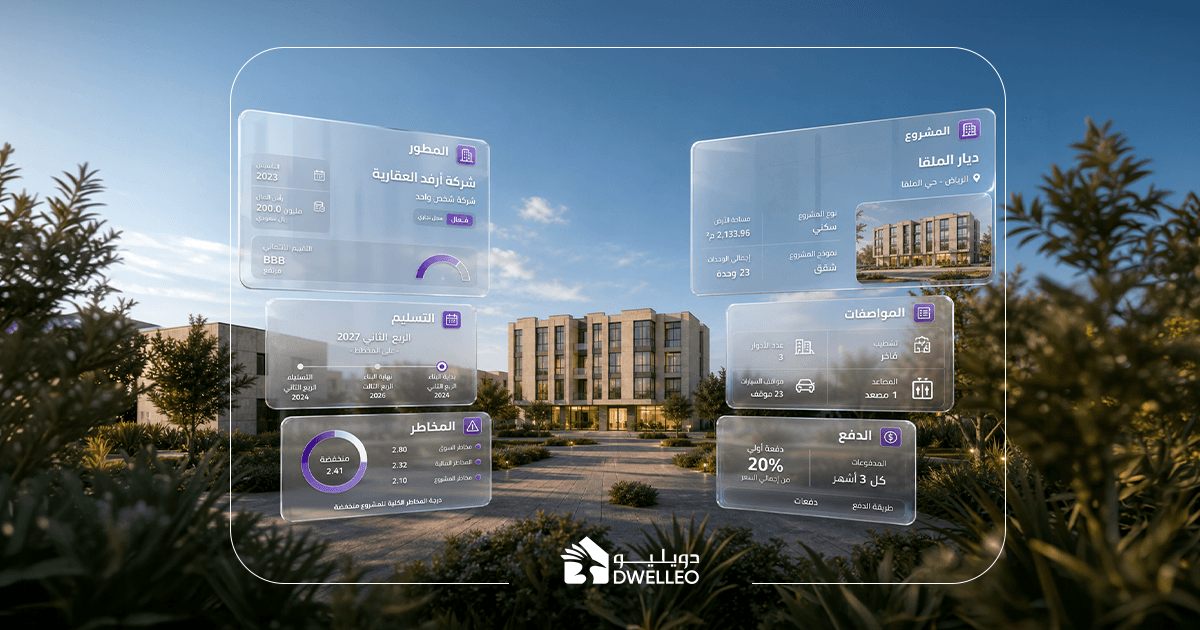
Buying off-plan property is an option for people who want to purchase a residential unit in Saudi Arabia before construction is complete. However, it requires careful evaluation of the project, developer, licensing, specifications, payment terms, and contractual obligations.
A unit may appear attractive because of its layout, size, or price, but these features alone are not enough to support a well-informed purchase decision. You also need to understand the project's regulatory status, how payments are handled, what specifications are contractually agreed upon, and what happens if the delivery schedule changes.
If you are wondering what to know before buying off-plan property, this guide explains the most important checks to make before signing an agreement, helps you understand potential risks, and shows you how to assess whether a project suits your needs and budget.
What Does Buying Off-Plan Property Mean?
Buying off-plan property means entering into an agreement to purchase a unit in a real estate development before construction is complete, subject to the applicable licensing and regulatory requirements.
In this situation, buyers rely on approved plans, specifications, project documentation, construction information, and contractual terms rather than inspecting a completed unit in person.
Off-plan developments may include different property types, such as apartments, villas, townhouses, and commercial units, depending on the project and its relevant approvals.
It is important to distinguish off-plan sales from simply purchasing a property that is under construction. A property's construction status alone does not establish that the project meets the regulatory requirements applicable to off-plan sales.
In Saudi Arabia, off-plan real estate sales are regulated through the relevant authorities and licensing framework. You can consult the official Real Estate General Authority (REGA) Wafi Off-Plan Sales and Lease platform for information about the applicable requirements and services.
Why Should You Verify the Details Before Buying Off-Plan Property?
When purchasing a unit that has not been completed, you may not be able to inspect all its final features or the shared facilities that will be available at handover. Reviewing the documents and verifying the information provided therefore becomes an essential part of the buying process.
A careful review can help you:
- Understand the project's regulatory status and relevant licenses.
- Assess the developer's track record and previous projects.
- Review construction progress and the expected delivery schedule.
- Verify the unit's specifications, area, and agreed amenities.
- Estimate your financial commitments and additional expenses.
- Understand your contractual rights and obligations.
These checks cannot eliminate every potential risk, but they can help you make a more informed decision and avoid relying on incomplete marketing information.
What Should You Check Before Buying Off-Plan Property? 7 Essential Points
1. Verify the Project's License and Regulatory Status
Checking the project's licensing is one of the most important steps before paying a reservation amount or signing a purchase agreement, particularly when the development is still under construction.
In Saudi Arabia, the Wafi program operates within the regulatory framework for off-plan real estate sales and leasing. Rather than relying solely on a project advertisement or assurances from a sales representative, verify the relevant information through official channels.
Before proceeding, check:
- Whether the project has the appropriate license for its status and activities.
- Whether the project name, location, and developer details match the official information.
- Whether the required permits and supporting documents are available.
- Whether the unit information matches the approved plans and documentation.
- Whether the reservation and payment procedures are clearly documented.
You can begin with the official REGA Wafi platform.
Licensing requirements may vary depending on the activity and the project's stage. Verify the requirements that apply to the specific development rather than assuming every project follows exactly the same procedures.
2. Evaluate the Developer's Experience and Track Record
The real estate developer plays an important role in the buying experience. Its ability to manage and deliver a project may affect construction quality, compliance with agreed specifications, and handover timelines.
When assessing a developer, look for reliable information about:
- Previous projects the developer has completed or participated in.
- Projects that have been completed and handed over to buyers.
- Construction and finishing quality in developments you can visit.
- The clarity and consistency of information provided to buyers.
- After-sales support, maintenance, and property management.
- Documented information about delays or contractual disputes, where available.
If possible, visit a previously completed project and examine the condition of its buildings and shared facilities after they have been in use.
You can also explore real estate projects on Dwelleo to discover listed developments and the information available about their associated developers.
However, do not rely on the number of projects or a company's reputation alone. A sound assessment combines the developer's track record with official documentation and verification of the specific project you intend to purchase.
3. Review Construction Progress and the Expected Handover Date
The practical risks of purchasing an off-plan property depend partly on the development's current stage. A project may be at the beginning of construction, well underway, or approaching completion.
It is therefore important to understand its actual status and review the construction schedule, distinguishing between a date used in marketing materials and the handover date specified in the contract.
When reviewing the project, check:
- The current stage of construction.
- The reported completion percentage and the source of that information.
- Whether progress can be independently verified.
- The contractual handover date.
- The status of shared amenities and facilities.
- Any documented updates to the construction schedule.
If the project is approaching completion, ask about the procedures for inspecting the unit, recording defects, and resolving outstanding issues.
If construction is still at an early stage, pay particular attention to approved documents, contractual terms, and procedures for dealing with delays.
A high reported completion percentage does not necessarily mean that every building and shared facility will be ready on the same date. Construction and service delivery may follow different schedules.
4. Review the Unit's Approved Plans and Specifications
Off-plan units may be marketed through illustrations, architectural renderings, or three-dimensional designs. These materials alone are not sufficient to establish the final specifications of the property you will receive.
Ask to review the approved plans, specifications, and contractual documents. Pay particular attention to:
- The unit's area and how it is measured.
- The number and layout of rooms and bathrooms.
- The unit's location within the building or development.
- Orientation and views, if they matter to your preferences.
- Parking spaces, storage areas, or additional spaces, where applicable.
- Agreed construction materials and finishing standards.
- Kitchen, bathroom, and air-conditioning equipment included in the agreement.
- Shared facilities and amenities included in the project.
You should also understand how potential changes to the area, plans, or materials would be handled and whether the agreement sets conditions for such changes.
Do not rely solely on the features shown in an advertisement. Compare the marketing materials with the written specifications that form part of the purchase agreement.
5. Evaluate the Project's Location and Nearby Services
Even a newly developed project with attractive specifications may not meet your needs if it is far from the services you use or inconveniently located for your daily routine.
Before buying, consider:
- Access to major roads.
- Travel time to work and schools.
- Availability of healthcare facilities, shops, and everyday services.
- The character of the surrounding area and nearby developments.
- The condition of existing infrastructure and available services.
- Announced future services, after verifying their actual status.
Distinguish between services that are already available and those that remain in planning or construction. Do not treat a proposed development as a service that will necessarily be ready when you move in.
You can also consult Dwelleo's separate guide to choosing the right neighborhood once its published English URL is available. That article can help you evaluate neighborhoods according to your daily needs and lifestyle.
6. Understand the Payment Plan, Escrow Account, and Total Cost
An affordable initial payment does not necessarily mean that a project fits your budget. You should understand your financial commitments throughout construction, at handover, and after taking ownership.
Review the following before signing:
- The total purchase price.
- The initial payment and its due date.
- The installment schedule, due dates, and payment conditions.
- Applicable taxes and transaction fees.
- Mortgage or financing costs, if relevant.
- Expected service and maintenance charges.
- Potential expenses after handover, including furnishing and fitting out the unit.
Why Is an Escrow Account Important in Off-Plan Projects?
For projects subject to Saudi Arabia's off-plan sales framework, escrow accounts form part of the regulatory arrangements governing project funds, according to the requirements that apply to the development.
Verify the project's designated escrow account and approved payment procedures. If you are unsure how payments should be deposited or which account is authorized to receive them, request written clarification from the responsible party.
The official REGA Wafi platform provides information about licensing and escrow-account requirements.
Do not transfer money to an account that is not identified in the relevant approved documentation, and avoid relying on undocumented payment instructions. Confirm the procedures that apply to your specific project rather than assuming that all developments have identical financial arrangements.
7. Review the Contract and the Terms for Delays, Cancellation, and Handover
Reviewing the contract is essential before signing because the agreement defines key financial commitments, unit specifications, the handover date, and related rights and obligations.
Make sure you understand the following terms:
- The project and unit details and specifications.
- The total price and payment schedule.
- The contractually specified handover date.
- Conditions that may allow an extension to the construction period, where applicable.
- Procedures and rights relating to delayed delivery.
- Cancellation and refund conditions and their financial implications.
- Applicable warranties, including their scope and duration.
- Service charges, maintenance fees, and other expenses.
- Procedures for inspecting, accepting, and documenting defects in the unit.
Read the contract and its attachments carefully, and make sure they match the information provided by the sales team. If you find unclear clauses or inconsistencies between documents, request written clarification before signing.
Consider consulting a qualified lawyer or specialist if needed, particularly when the purchase involves a substantial financial commitment or long-term contractual obligations.
What Risks Should You Consider When Buying Off-Plan Property?
Purchasing a property before construction is complete involves risks related to construction progress, financial commitments, and changing market conditions. Understanding these risks helps you prepare for potential challenges instead of relying only on positive expectations.
Common risks include:
- Handover delays: The construction schedule may change, with the consequences governed by the applicable contract terms and regulations.
- Differences in specifications: Disagreements may arise if details are not clearly documented in the agreement.
- Financial commitments: Changes in your personal circumstances may affect your ability to meet scheduled payments.
- Additional costs: Ownership may involve expenses that were not included in your initial budget.
- Market changes: Property prices may rise or fall during construction; neither outcome is guaranteed.
- Uncertain future amenities: Some facilities may be delayed or become operational later than expected.
These risks do not automatically make off-plan property unsuitable. They highlight the importance of verifying documentation, understanding the contract, and ensuring that you can afford the financial commitments before buying.
Is Off-Plan Property Suitable for Living or Investing?
The right choice depends on your objectives, because the priorities of someone buying a family home differ from those of an investor.
If You Are Buying to Live in the Property
Focus on whether the unit meets your current and future needs. Consider:
- The number of rooms, space, and layout.
- The project's location and nearby services.
- The handover date and whether it fits your plans.
- Finishing quality and shared facilities.
- Your budget and ability to meet scheduled payments.
If You Are Buying for Investment
You may also need to evaluate:
- Potential demand for the property type in the area.
- Prices of comparable properties.
- Potential rental income after completion.
- Purchase, operating, and maintenance costs.
- The level of available supply and competition.
- The potential to resell the unit in the future.
Rental and future price estimates are projections, not guarantees of a specific return. Prepare a financial assessment that considers costs and potential risks before making an investment decision.
How Can Dwelleo Help You Explore Off-Plan Projects?
Dwelleo can help you discover real estate projects and organize your comparison of available options according to your needs and budget.
Useful resources may include:
- Real Estate Project Pages: Explore listed developments and review available information about their units.
- Developer Information: Discover developers and their associated projects, based on the information available.
- Search and Filters: Narrow your options by city, location, property type, and available specifications.
- Market Insights: Review available market information and indicators to support your initial comparison.
Start with Dwelleo's real estate projects, explore the available developments, and identify the projects that warrant further research and contact with their developers.
Remember that information on a real estate platform helps you discover options and organize your search. It does not replace official license verification or a legal and financial review of the purchase agreement.
Frequently Asked Questions About Buying Off-Plan Property
Is Buying Off-Plan Property Safe in Saudi Arabia?
You can reduce risks by verifying the project's license and regulatory status, reviewing the developer and specifications, and understanding the payment schedule and purchase agreement. However, you should still consider construction, market, and financial risks before buying. No project can be assumed to be entirely risk-free.
How Can I Verify an Off-Plan Project's License?
Start with the official channels of the Real Estate General Authority and its Wafi program. Verify the project and developer details and the applicable license, then compare that information with the documents provided by the seller. Do not rely solely on marketing materials.
Why Is an Escrow Account Important When Buying Off-Plan Property?
Under the applicable regulatory framework, an escrow account helps manage funds designated for a development. Verify the project's approved account and payment procedures using the relevant official documentation, and request clarification if you are uncertain about how payments should be made.
Can I Cancel an Off-Plan Property Purchase Agreement?
The ability to cancel and the financial consequences depend on the contract, applicable regulations, and the circumstances of the case. Review the cancellation and refund provisions before signing, and seek legal advice if needed.
What Is the Difference Between Buying Off-Plan Property and Buying a Ready Property?
A ready property allows you to inspect the actual unit and its facilities before buying. An off-plan purchase depends more heavily on approved plans, specifications, documentation, construction progress, the delivery schedule, and the contractual terms.
Conclusion: What Should You Know Before Buying Off-Plan Property?
A well-informed purchase begins with verifying the project's license and developer, then reviewing construction progress, specifications, location, payment arrangements, escrow requirements, contract terms, and the handover date.
The clearer and better documented the information is, the better equipped you will be to compare projects, understand your commitments, and evaluate potential risks before buying a unit.
Start with Dwelleo's real estate projects, explore available developments, and compare the options that suit your needs. Before committing to a purchase, verify the relevant licenses, documentation, and contractual terms.