

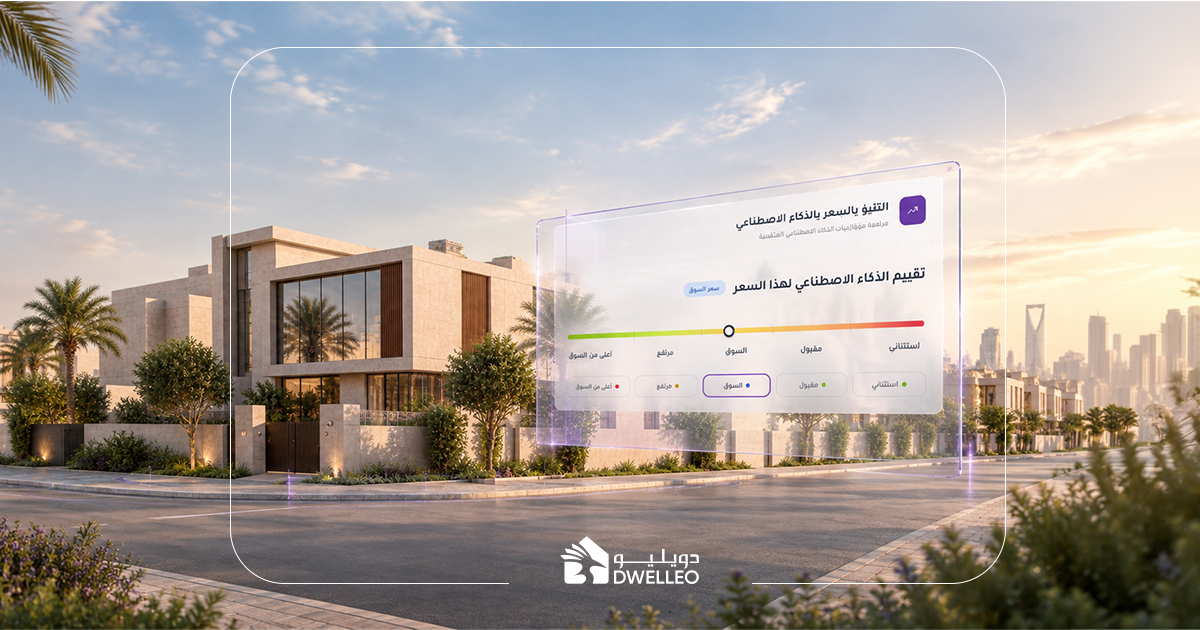
Is the property price right? This is an important question when you find a property that fits your needs and budget, but you are not sure whether the asking price reflects its actual value.
The price shown in a listing is the amount requested by the seller. It does not necessarily represent what the property's characteristics or current market conditions support. Two similar properties in the same neighborhood can still have different prices because of differences in location, condition, size, finishing, and features.
That is why determining whether a property is reasonably priced should not start with looking for the cheapest property. Instead, you need to understand the relationship between the price, the property's characteristics, and comparable properties available in the market.
Before buying, try to answer three questions:
What is the property's estimated value?
How does its price compare with similar properties?
What explains any difference between these prices?
Answering these questions gives you a stronger basis for reviewing the asking price and negotiating before making a decision.
Start by Comparing the Asking Price with the Estimated Property Value
The first step is to understand whether the asking price is reasonably close to the property's estimated value.
A difference between the asking price and estimated value does not automatically mean there is a problem. It simply means that the difference needs to be understood.
Start by reviewing:
- The price requested by the seller.
- The property's estimated value.
- The size of the difference.
- The characteristics that may explain the difference.
If the asking price is higher than the estimated value, look for the features that may justify the premium. If it is lower, look for the reasons before assuming that the property represents an opportunity.
The important point is not to treat an estimated value as a final transaction price, but as an additional reference point when reviewing the asking price.
Compare the Property with Truly Similar Properties
A comparison becomes less useful when you simply choose any property in the same neighborhood.
Instead, look for properties that are similar in:
- Property type.
- Size.
- Location.
- Building age and condition.
- Finishing level.
- Key features.
Then look at the prices as a range for comparison, rather than as a single number that the property must match.
One property may be more expensive because it has a better location or newer condition, while another may be cheaper because it requires maintenance or differs in important features.
When Could a Property Be Overpriced?
A price that is higher than comparable properties does not automatically mean the property is overpriced.
However, the price deserves closer review when:
- Several similar properties are clearly available at lower prices.
- The property requires maintenance or renovation despite its higher price.
- There is no clear advantage in the location or features that explains the price difference.
- The asking price appears to be based more on the seller's expectations than on the property's characteristics or market conditions.
- Nearby alternatives offer similar features at a lower price.
This does not automatically mean you should exclude the property. It simply gives you a stronger basis for reviewing the price or negotiating.
Does a Lower Price Mean You Found a Good Opportunity?
A lower price may be attractive, but it also raises an important question:
Why is the price lower?
The reason may be a different location, property condition, building age, or additional costs that you will have to cover after purchase.
Before making a decision, review:
- The property's condition and required maintenance.
- Important differences between the property and the comparables.
- Demand for the property type and its location.
- Additional costs after purchase.
- Its suitability for resale or rental if the purpose is investment.
For investors, the goal is not simply to buy at the lowest price. The more important question is why the property is priced this way and what you are getting in return.
What Could Justify Paying a Higher Price?
Paying a higher price can make sense when the property offers characteristics that have meaningful value to you or to the market.
Examples may include:
- A better location.
- Newer condition.
- Higher-quality finishing.
- A practical layout.
- Additional parking.
- Amenities or features that are difficult to find in comparable properties.
- Stronger demand for the property type or location.
So do not ask only:
Is the property more expensive?
Also ask:
What am I getting in return for the higher price?
If the property has clear characteristics that explain the difference, the higher price becomes easier to understand and compare.
Prepare Your Numbers Before Negotiating the Price
Negotiation becomes more effective when it is based on clear information rather than personal impressions.
Before making an offer, it is useful to know:
- The property's estimated value.
- The prices of several similar properties.
- The difference between the property and available alternatives.
- Expected maintenance or renovation costs.
- The features that do or do not justify the asking price.
- The total price that fits your budget.
This gives you a clear basis for discussing the price rather than simply asking for a discount.
How Can Dwelleo Tools Help You Evaluate a Property Price?
When you are looking at a specific property, Dwelleo's tools can help you move from simply feeling that a price is high or low to reviewing the price using additional estimates and information.
Estimate Your Property
Estimate Your Property is aligned with the property valuation need in Dwelleo's content strategy and can provide an estimated property value to use as an additional reference when reviewing an asking price.
The estimate should be treated as one part of your comparison process rather than as a final number that determines the purchase or sale price.
AI Property Price Prediction
Dwelleo also documents AI Property Price Prediction, which predicts optimal buying and selling prices. Users can compare the prediction with the asking price to support their review of the property's price.
Again, the result is best used as an additional input when evaluating the price rather than as the only basis for a decision.
How Can You Tell if a Property Price Is Reasonable Before Buying?
There is no single method that works for every property, but you can build a clearer picture by combining several indicators.
Start with:
- Reviewing the estimated value.
- Comparing the property with similar properties.
- Understanding differences in location, size, condition, and features.
- Reviewing expected maintenance and renovation costs.
- Looking at the asking price within the broader market context.
- Making sure the price fits your objective and budget.
The better the comparison, the easier it becomes to understand whether a price difference is reasonable or requires further review.
What Mistakes Should You Avoid When Evaluating a Property Price?
Some common mistakes include:
- Relying on a single listing price.
- Comparing properties that are significantly different.
- Treating an area average as a fixed value.
- Relying on price per square meter alone.
- Ignoring property condition and age.
- Ignoring maintenance and renovation costs.
- Assuming that a low price automatically means a good investment opportunity.
- Assuming that a high price automatically means the property is overpriced.
- Relying on a single estimate without reviewing other relevant information.
The problem is not that property prices differ. The problem is failing to understand why they differ.
Conclusion
Determining whether a property price is reasonable does not depend on comparing the price alone or simply finding the cheapest property.
A better approach is to review the estimated value, compare the property with similar properties, understand differences in location, size, condition, and features, and then place the asking price within the broader market context.
Dwelleo's property valuation and price prediction tools can provide additional information to support your review of a property price before buying or selling.
Frequently Asked Questions
How Can I Tell if a Property Is Overpriced?
Start by comparing the asking price with the estimated value and the prices of several similar properties. If the price remains significantly higher and there are no clear property characteristics that explain the difference, the price may require further review.
Does a Lower Property Price Mean It Is Better?
Not necessarily. A lower price may be caused by differences in location, condition, age, features, or additional costs. Understanding the reason for the lower price is important before making a decision.
Is the Asking Price the Actual Value of a Property?
Not necessarily. The asking price is the amount requested by the seller. The estimated value and final transaction price may differ depending on the property's characteristics and market conditions.
How Can I Estimate the Value of a Property?
You can use Estimate Your Property as an additional reference when reviewing a property's price, alongside comparable properties and relevant market information.
Can I Negotiate a Property Price That Is Higher Than Comparable Properties?
Comparable properties and an estimated value can provide a useful basis for discussing and negotiating a property's asking price, especially when you can clearly identify the reasons for the price difference.