

How do you evaluate a property’s location before buying? It is an important question for anyone looking for a home or considering a real estate investment. A property’s location can affect not only your daily quality of life but also its market value, rental appeal, and potential resale prospects.
Two properties may have similar sizes and features but different prices because of their neighborhoods, access to essential services, road connections, or surrounding developments. That is why choosing a well-known neighborhood is not enough. You need to assess the property’s exact location and determine whether it suits your needs, budget, and long-term goals.
In this guide, we explain how to evaluate a property’s location before buying, what to look for in a neighborhood, how to assess nearby services and roads, and how to compare locations and property prices before making a decision.
Why Is Location One of the Most Important Factors When Buying a Property?
Location is one of the few aspects of a property that you cannot easily change after purchasing it. You may be able to renovate a kitchen or improve the interior finishes, but you cannot move the property closer to your workplace or change the surrounding neighborhood.
This makes location an essential part of the buying decision.
Here are some of the main reasons why location matters:
- Everyday convenience: Proximity to workplaces, schools, healthcare facilities, and essential services can reduce travel time and make daily routines easier.
- Market value: Property prices may vary depending on local services, neighborhood characteristics, accessibility, and demand.
- Resale potential: Some locations may attract a wider range of buyers, depending on market conditions and property characteristics.
- Rental demand: A suitable location may appeal to tenants, depending on local demand and the type of property.
- Comfort and privacy: Traffic, noise, street activity, and building density can affect the overall living experience.
- Future development: Infrastructure improvements and nearby projects may influence a neighborhood’s appeal, although they do not guarantee future price increases.
For these reasons, location should be evaluated alongside the property’s price, condition, size, and features.
How Do You Evaluate a Property’s Location Before Buying?
A practical evaluation involves more than checking an address on a map. You need to understand the surrounding area, assess accessibility, and compare the property with similar options.
Start with these steps:
- Determine whether the neighborhood suits your residential or investment goals.
- Check the availability of nearby services and essential facilities.
- Evaluate road access and travel times to important destinations.
- Assess noise levels, traffic, privacy, and the character of nearby streets.
- Review existing and planned developments in the surrounding area.
- Compare the property’s asking price with similar properties in the same neighborhood.
- Visit the location at different times of day.
Combining these steps gives you a more realistic picture of the location and helps you decide whether its advantages justify the asking price.
How Do You Choose the Right Neighborhood When Buying a Property?
The right neighborhood is not necessarily the most expensive or the most well-known one. It is the area that best matches your lifestyle, priorities, and budget.
For example, a family may prioritize a quiet residential environment close to schools and everyday services. Someone who commutes daily may focus on travel times and access to main roads. An investor, meanwhile, may be more interested in rental demand, competing properties, and the area's appeal to potential tenants.
Before choosing a neighborhood, consider the following factors:
- Neighborhood character: Is the area primarily residential, commercial, or a mix of both?
- Noise levels: Is the property close to busy roads, workshops, or activities that may cause disruption?
- Available services: Are schools, healthcare facilities, shops, and everyday amenities nearby?
- Accessibility: Can you enter and leave the neighborhood conveniently?
- Infrastructure: Are essential utilities and public services already available?
- Property demand: Is there evidence of buyer or tenant interest in similar properties in the area?
A neighborhood does not need to score highly in every category. What matters is finding the right balance between your priorities, the location's characteristics, and the price you can afford.
How Do Nearby Services and Roads Affect a Property’s Location?
A property may appear close to a workplace or school on a map, but distance alone does not tell you how convenient the journey will be. Actual travel time depends on traffic, road conditions, intersections, and the available entrances and exits.
Which Nearby Services Should You Check?
Before buying, identify the services you need and assess how easily you can reach them. These may include:
- Schools and other educational facilities, especially for families with children.
- Hospitals, clinics, and other healthcare services.
- Supermarkets, grocery stores, and pharmacies.
- Mosques and community facilities.
- Parks and public spaces.
- Shopping centers and recreational facilities.
- Essential infrastructure, including water, electricity, telecommunications, and sewage services.
It is also important to distinguish between services that are already operating and those that are still under construction or at the planning stage. An announced project does not necessarily mean that the service will be completed on schedule.
How Should You Evaluate Roads and Accessibility?
When assessing road access, consider:
- Proximity to major roads and how easily you can reach them.
- The availability of suitable entrances and exits.
- Traffic congestion during peak hours.
- The condition of internal roads, sidewalks, and street lighting.
- Access to public transportation or other convenient travel options.
- Actual travel times to work, schools, and essential services.
- The availability of parking inside or near the property.
A practical approach is to test the route during a normal working day and compare travel times at different hours.
Being close to a major road is not always an advantage. It may make commuting easier, but a property directly facing a busy road may experience more noise and less privacy. Evaluate road accessibility alongside the property's exact position and its surrounding environment.
How Can You Tell Whether a Neighborhood Is Quiet and Suitable for Living?
Property photos and listing descriptions rarely provide a complete picture of a neighborhood. Noise levels and traffic can vary between daytime and evening, as well as between working days and weekends.
During your visit, pay attention to:
- Noise from vehicles and nearby commercial activity.
- Proximity to workshops, construction sites, or other disruptive activities.
- Traffic levels on residential streets.
- Street lighting, sidewalks, and the condition of public spaces.
- Privacy between neighboring buildings.
- Traffic entering and leaving nearby residential developments.
- Construction projects that may continue for an extended period.
Whenever possible, visit the property more than once and speak with residents in the area. However, do not rely on a single person's opinion. Combine these observations with your own visits and any reliable information available about the neighborhood.
How Can Nearby Developments Affect Property Value?
Evaluating a location means looking at both its current conditions and the changes that may occur in the surrounding area.
Road improvements, transportation projects, public facilities, residential developments, and commercial projects may affect accessibility and the attractiveness of a neighborhood. Their impact depends on their nature, scale, location, and stage of development.
When researching a location, look for:
- Road improvements, intersections, and transportation projects.
- Planned schools, healthcare facilities, and other public services.
- New residential developments and the potential increase in property supply.
- Shopping centers and business districts.
- Infrastructure and utility projects.
- Parks, recreational facilities, and public spaces.
Distinguish between completed projects, formally announced developments, and projects that remain at the planning stage. Do not assume that every new development will increase property prices. The outcome also depends on supply, demand, wider economic conditions, and the characteristics of the local market.
How Do You Compare Property Prices Within the Same Neighborhood?
After deciding that a location suits your needs, compare prices to determine whether the asking price is reasonable in relation to the property’s features and location.
The neighborhood’s average price alone is not enough. Prices within the same area can vary according to the street, property type, size, building age, condition, finishing quality, and available amenities.
To make a more meaningful comparison:
- Choose comparable properties: Compare properties of the same type with similar sizes and conditions.
- Review the price per square meter: Use it as a comparison tool, not as the only measure of value.
- Consider the building’s age and condition: Maintenance needs and finishing quality can affect the price.
- Evaluate the exact location: Differences between streets and proximity to services may help explain price variations.
- Compare property features: Consider parking, elevators, views, and shared facilities.
- Review available market data: Use relevant price indicators and market trends to put asking prices into context.
You can explore Dwelleo Market Insights to review available market indicators and asking-price trends. You may also find it useful to read Average Price Per Square Meter in Real Estate: How to Read It and Compare Different Areas to understand how to use this metric when comparing properties and locations.
Remember that asking prices in property listings are not necessarily the same as the final prices paid in completed transactions. Where reliable transaction data is available, it can provide additional context for your comparison.
How Do You Evaluate a Property’s Location in Riyadh and Jeddah?
Location priorities can differ between cities and even between neighborhoods within the same city. Road networks, available services, urban development, and commuting patterns can all influence the living experience.
A useful approach is to identify suitable areas first, then compare individual properties using the same evaluation criteria.
Evaluating a Property’s Location in Riyadh
When buying a property in Riyadh, consider travel times between neighborhoods, proximity to work and everyday services, and the level of infrastructure development in the area.
Key factors to review include:
- Travel time to work during peak hours.
- Access to major roads and transportation routes.
- Availability of schools, healthcare facilities, and everyday services.
- Access to public transportation where relevant.
- The neighborhood’s character and infrastructure.
- Property prices across comparable neighborhoods.
If you are comparing apartments, start with apartments for sale in Riyadh, then explore individual areas such as Al Arid, Al Ghadeer, and Al Malqa.
Comparing properties across these locations can help you understand the differences between available options. Your final decision should still reflect your needs, budget, and the specific features of each property.
Evaluating a Property’s Location in Jeddah
When evaluating a property in Jeddah, pay attention to access to workplaces and essential services, road conditions, entry and exit routes, and traffic congestion.
It is also worth reviewing drainage conditions and the risk of water accumulation at the specific location. Check reliable official information and conduct an on-site assessment rather than relying solely on the property listing.
If you are looking for an apartment, explore apartments for sale in Jeddah, then narrow your search to neighborhoods that match your budget and priorities.
As in Riyadh, do not rely solely on a neighborhood's reputation or average prices. Compare the property's exact location, nearby services, accessibility, and condition before deciding.
Is the Best Property Location for Living Also the Best for Investment?
Not necessarily. The right location depends on your reason for buying.
If You Are Buying a Home
You may want to prioritize:
- Proximity to work, schools, and everyday services.
- Convenient commuting and transportation.
- Quiet surroundings and privacy.
- A neighborhood that suits your lifestyle.
- The quality and availability of essential infrastructure.
If You Are Buying as an Investment
You may also need to evaluate:
- Rental demand in the area.
- Typical rents for comparable properties.
- The purchase price relative to potential rental income.
- Operating and maintenance costs.
- Available supply and competing properties.
- Potential resale demand.
Avoid making an investment decision based only on an expectation that prices will rise. Review available market indicators, compare several opportunities, and account for costs and uncertainty. Market data and estimates can support your research, but they cannot guarantee a specific future return.
Common Mistakes to Avoid When Evaluating a Property’s Location
Focusing on a single advantage can cause you to overlook other important factors. Common mistakes include:
- Relying on the neighborhood’s reputation: Without evaluating the property's exact street and surroundings.
- Judging from photos alone: Without visiting the property and checking the surrounding area.
- Ignoring traffic conditions: By relying on distance rather than actual travel time.
- Assuming services are available: Without checking whether they are already operating.
- Overestimating future developments: Without verifying the project’s status and expected timeline.
- Comparing dissimilar properties: Without accounting for differences in size, condition, and features.
- Ignoring commuting costs: A less expensive property may involve higher travel costs over time.
- Overlooking the surrounding environment: Nearby commercial activities or construction may affect daily living.
A simple way to avoid these mistakes is to create a checklist of your priorities and use the same criteria whenever you compare different properties or neighborhoods.
How Can Dwelleo Help You Evaluate a Property’s Location Before Buying?
Evaluating a location involves gathering information about the property, its neighborhood, nearby services, and local prices. Dwelleo can help you organize your search and compare available options using the information and tools provided on the platform.
Depending on the property and data available, useful features may include:
- Property search and smart filters: Narrow your search by city, neighborhood, property type, price, and other relevant features.
- Market Insights: Explore available market information, asking-price indicators, and trends.
- Property value estimates: Where available, review an indicative estimate to help assess a property's price.
- Investment Score: Where available, use the indicator as one input when comparing investment-related aspects of a property.
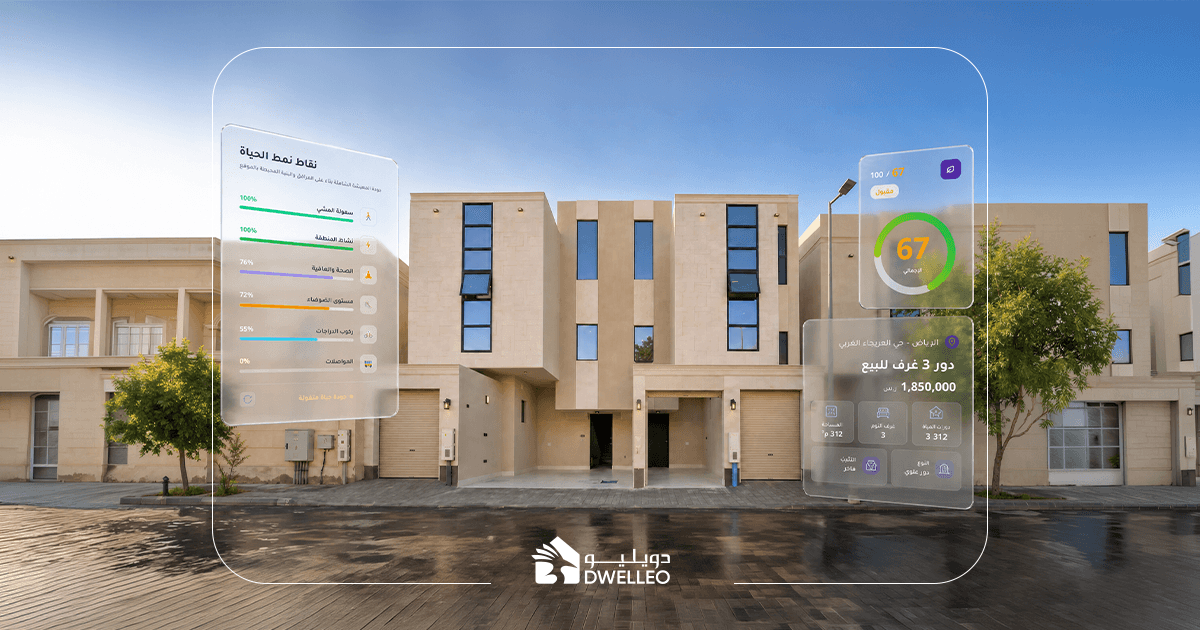
- Lifestyle Score (Life Score): Where available, review indicators related to the surrounding environment and lifestyle factors.
You can begin your search on Dwelleo Properties to explore available listings and review the details provided.
Remember that estimates and indicators are supporting tools. They do not replace an on-site visit, independent checks, or verification of important property information before you buy.
Frequently Asked Questions About Evaluating a Property’s Location
How can I tell whether a property’s location is suitable before buying?
Review nearby services, travel times to work and schools, traffic conditions, road access, and the character of the neighborhood. Compare the asking price with similar properties and visit the location at different times before making a decision.
Does proximity to nearby services increase property value?
Proximity to useful services may improve a property's appeal and influence its price. However, the effect depends on the type and quality of the services, local demand, the property's condition, and available supply. Being close to services does not guarantee a price increase.
Is it better to buy a property in a new neighborhood or an established one?
The answer depends on your needs and buying objectives. An established neighborhood may offer more readily available services, while a newer area may offer different property options and potential future opportunities. In either case, verify the existing infrastructure and available services instead of relying only on planned developments.
Should I choose a property close to a major road?
Not necessarily. Being close to a major road may make commuting easier, but a property directly facing a busy road may experience more noise and less privacy. Evaluate road access alongside traffic, street conditions, and the property's entrances and exits.
Evaluate a Property’s Location Before You Buy with Dwelleo
Choosing the right property involves more than comparing size and price. It requires understanding the location, nearby services, road access, neighborhood conditions, and surrounding market.
By comparing locations using consistent criteria and verifying the information available, you can make a more informed decision that suits your needs and budget.
Start with Dwelleo to explore available properties, compare locations and asking prices, and review market information before making your buying decision.