

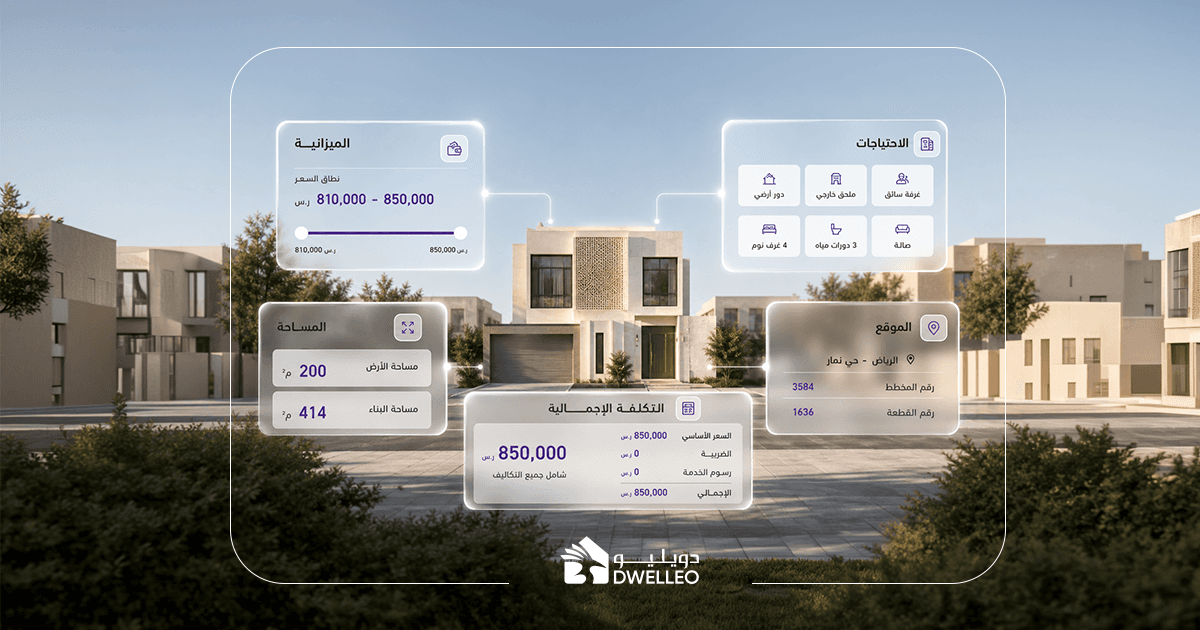
How do you choose an apartment that fits your budget? It is an important question for anyone looking to buy an apartment in Saudi Arabia, especially given the variety of available properties and differences in prices, sizes, and locations. Two apartments with similar specifications may have different total ownership costs because of their location, building condition, or additional purchase expenses.
Choosing the right apartment is not simply about finding an affordable asking price. It requires balancing your financial capacity, housing needs, and the costs you may face before and after buying.
In this guide, we explain practical steps to help you determine your budget, choose a suitable size and location, compare apartment prices, and verify important details before making a purchase decision.
How Do You Choose an Apartment Within Your Budget?
Start by determining how much you can allocate to an apartment without compromising your essential financial commitments. You can then identify the features you need and search for properties that fit your budget.
Before starting your search, focus on five key factors:
- Budget: The amount available for the purchase and the financing you can reasonably afford.
- Total cost: Additional expenses related to the transaction, furnishing, and maintenance.
- Housing needs: The number of bedrooms, property size, and essential amenities.
- Location: The city and neighborhood, including how close they are to your everyday destinations.
- Priorities: The essential features you cannot compromise on and the optional features you can do without.
Defining these factors early helps you narrow your options and avoid choosing an apartment that exceeds your financial capacity simply because it offers extra features.
1. Set Your Budget Before Searching for an Apartment
Setting a budget is the first step in the buying process because it helps you determine the price range you should focus on.
Start by reviewing your financial position and deciding how much you can allocate to the purchase while keeping an appropriate reserve for unexpected expenses.
Consider the following factors:
- Savings available for the purchase.
- Monthly income and existing financial commitments.
- Expected down payment.
- Monthly installments you can afford if you plan to use mortgage financing.
- Essential household expenses.
- The amount you want to keep available for emergencies.
If you plan to use mortgage financing, review your repayment capacity and compare financing offers from licensed providers. Make sure you understand the annual percentage rate, total financing cost, and relevant terms before signing an agreement.
Your maximum financing eligibility should not be the only factor determining your budget. What matters most is whether you can meet the monthly payments without compromising your essential expenses.
2. Calculate the Total Cost of Buying an Apartment
An apartment may appear affordable based on its asking price, but the actual cost of buying it may be higher once transaction and setup expenses are included.
It is therefore important to distinguish between the advertised price and the estimated total cost of ownership.
Depending on the property and transaction, additional costs may include:
- Applicable taxes and transaction fees, taking into account any relevant exemptions or support programs.
- Financing and property valuation fees, where applicable.
- Documentation and transaction-related service costs.
- Furnishing, fitting out, and finishing expenses.
- Potential maintenance and repair costs.
- Shared facility management and maintenance charges, where relevant.
For example, if your total budget is SAR 1 million, spending the entire amount on the apartment itself may leave you without enough funds to cover additional expenses.
Instead, estimate the purchase price and other expected costs separately, then determine the maximum amount you can reasonably pay for the apartment itself.
This approach makes it easier to compare properties realistically and reduces the risk of choosing an apartment that exceeds your budget once all costs are considered.
3. Define Your Housing Needs Before Choosing an Apartment
After setting your budget, identify the features you actually need. The largest apartment is not necessarily the best choice, and paying for every available feature may increase the price without providing meaningful value.
Start by asking yourself the following questions:
- How many people will live in the apartment?
- How many bedrooms do you need now?
- Do you need an additional room for working from home or hosting guests?
- Do you need a dedicated parking space?
- Are elevators and shared facilities essential to you?
- Do you plan to live in the apartment for several years?
- Which features could you give up in exchange for a more affordable price?
Next, divide your requirements into two categories.
Essential features: These may include the minimum number of bedrooms, required space, an acceptable budget, and a suitable location.
Optional features: These may include a balcony, a particular view, or additional fittings that you can do without if they significantly increase the cost.
This distinction helps you remain flexible, especially when the number of suitable properties within your budget is limited.
4. Choose an Apartment Size That Fits Your Budget
Apartment size affects both the purchase price and how comfortably you can use the space. However, size alone does not determine whether an apartment suits your needs.
A smaller apartment may be more practical than a larger one if its layout makes better use of the available space.
When comparing apartment sizes, consider:
- The number and size of bedrooms.
- The number and location of bathrooms.
- The size of the living room.
- Kitchen size and practicality.
- Available storage space.
- How efficiently corridors and interior areas are used.
- Whether any areas are difficult to use effectively.
Total Area vs. Usable Interior Area
When reviewing an apartment listing, check how the advertised area is calculated. The total area may differ from the usable interior area, depending on the property's documentation and measurement definitions.
Review the floor plan and arrange a viewing whenever possible to confirm that the actual layout and usable space meet your needs.
If you plan to live in the apartment for many years, consider potential future requirements, such as a growing family or the need for a home office. However, this does not mean you should automatically buy a larger apartment than you can comfortably afford.
The goal is to balance space, practicality, and affordability.
5. Choose an Apartment Location That Fits Your Budget
Location influences an apartment's asking price, commuting costs, and everyday convenience. You may find a larger apartment in a more distant neighborhood for the same price as a smaller apartment closer to work and essential services.
When evaluating locations, consider:
- Distance and travel time to work.
- Proximity to schools and universities, where relevant.
- Availability of healthcare facilities, shops, and everyday services.
- Access to major roads.
- Available transportation options.
- Traffic congestion and noise levels.
- Whether the area meets your current and future needs.
If your budget does not allow you to buy the type of apartment you want in your preferred neighborhood, consider expanding your search to nearby areas. You may find a more suitable option in terms of size or price without moving too far from your everyday destinations.
If you are still deciding which area suits you best, refer to Dwelleo's guide to choosing the right neighborhood once its published URL is available. It explains how to evaluate neighborhoods based on lifestyle, family needs, and budget.
6. Compare Apartment Prices Before Making a Decision
The asking price alone is not enough to determine whether an apartment fits your budget. Compare it with similar properties in terms of location, size, condition, and specifications.
When comparing apartments, review:
- Location: Compare properties within the same neighborhood or similar nearby areas.
- Size: Check the area and how it is measured.
- Building age: Review the building's age and general condition.
- Finishing quality: Assess the condition of materials, fittings, and equipment.
- Amenities: Check parking, elevators, and shared facilities.
- Additional expenses: Estimate maintenance, furnishing, and other potential costs.
Is Price Per Square Meter Enough to Compare Apartments?
Price per square meter is useful for understanding approximate price levels, but it is not sufficient on its own to determine an apartment's value.
Two apartments in the same building may differ in price because of their floor level, view, layout, or finishing condition.
Read Dwelleo's guide to Average Price Per Square Meter in Real Estate: How to Read It and Compare Different Areas to understand how to use this metric effectively.
You can also explore Dwelleo Market Insights to review available real estate data and price indicators.
Use this information to support your decision, remembering that an area's average price or a property's price per square meter does not necessarily reflect the actual value of every apartment.
7. Is It Better to Buy a New or Resale Apartment?
Choosing between a new and a resale apartment depends on your budget, housing needs, and the property's condition.
Advantages of Buying a New Apartment
A new apartment may appeal to buyers who prefer modern properties or want to minimize the need for renovation after purchase.
Potential advantages include:
- Modern finishes and fittings, depending on the specifications.
- Less initial renovation work if the unit is ready and in good condition.
- Layouts that may suit some modern housing needs.
- Access to applicable warranties, subject to their terms.
However, you should still verify construction quality, unit specifications, and any available warranties before buying. If the apartment is part of an off-plan development, review the relevant licenses, construction status, handover date, and contract terms.
Advantages of Buying a Resale Apartment
A resale apartment may offer suitable options in established neighborhoods where essential services are already available.
Potential advantages include:
- A wider range of prices and sizes within the same neighborhood.
- The opportunity to inspect the apartment and building before purchase.
- A clearer view of the surrounding services and environment.
- Different layouts and property types to choose from.
However, inspect the apartment and building, verify the relevant documents, and account for any repair or renovation expenses.
In either case, compare the total cost, property condition, and suitability for your needs rather than choosing based only on the apartment's age or advertised price.
What Mistakes Should You Avoid When Buying an Apartment Within Your Budget?
Certain mistakes can lead to buying an apartment that does not meet your needs or costs more than expected.
Common mistakes include:
- Setting a budget based only on the asking price: Without accounting for additional expenses.
- Choosing a location without considering daily travel: Potentially increasing commuting time and costs.
- Focusing only on the total area: Without reviewing the room layout and usable space.
- Ignoring the building's condition: Particularly when buying a resale apartment.
- Failing to compare alternatives: Choosing the first apartment that appears suitable.
- Paying a reservation deposit too quickly: Before reviewing the relevant documents and terms.
- Overlooking future needs: Choosing a unit that may become unsuitable within a short period.
Preparing a clear list of requirements and costs, then comparing the available options, can help reduce the likelihood of these mistakes.
What Should You Inspect Before Buying an Apartment?
After identifying an apartment that suits your budget, location, and space requirements, verify its physical condition and documentation before completing the purchase.
Inspect the Property's Physical Condition
Check the following:
- Walls, ceilings, and floors.
- Electrical wiring and plumbing.
- Air-conditioning and ventilation.
- Signs of dampness or water leaks.
- The condition of elevators, parking areas, and shared facilities.
Consider hiring a qualified professional to inspect the apartment when needed, particularly if you notice signs of damage or are buying in an older building.
Review Ownership and Property Documents
Before committing to the purchase, verify:
- Ownership information and relevant documentation.
- Whether the apartment details match the official records.
- Any obligations or restrictions associated with the property.
- The terms of sale, payment, and handover.
- Fees and responsibilities related to shared facilities.
Do not rely solely on information provided in the property listing. Verify the relevant documentation before making a final decision.
How Can Dwelleo Help You Choose an Apartment Within Your Budget?
When searching for an apartment, you may encounter many options with different prices, sizes, and locations. Organizing and comparing these options can be challenging without suitable search tools.
Dwelleo helps you organize your search and explore available properties according to your needs, using tools and information that support the decision-making process.
Depending on the features available on the platform, useful tools may include:
- Smart Filters: Narrow results by location, budget, size, and available specifications.
- AI Search Agent: Help search for properties based on your preferences using the available search capabilities.
- Property Comparison: Compare available properties using their listed data and specifications.
- Market Insights: Explore available market information and indicators to better understand price levels.
Start with apartments for sale in Saudi Arabia, then narrow your search by city, budget, size, and required specifications.
If you are searching in a particular city, explore apartments for sale in Riyadh or apartments for sale in Jeddah.
Property viewings and verification of documentation and actual costs remain essential steps before making a purchase decision.
Frequently Asked Questions About Choosing an Apartment Within Your Budget
How Do I Choose an Apartment Without Exceeding My Budget?
Start by determining the total amount available for the purchase. Then calculate additional expenses and expected monthly payments if you plan to use mortgage financing. Identify your essential requirements and search for apartments within your budget while keeping an emergency reserve.
Is It Better to Buy a Smaller Apartment in a Better Location or a Larger Apartment Farther Away?
It depends on your priorities. If proximity to work and essential services matters most, a smaller apartment in a convenient location may be the better fit. If you need extra bedrooms and more living space, a larger apartment in a more distant neighborhood may be suitable, provided you account for commuting costs and available services.
What Additional Costs Should I Consider When Buying an Apartment in Saudi Arabia?
Additional expenses may include applicable taxes and transaction fees, financing and valuation costs, documentation expenses, furnishing, maintenance, and shared facility charges. The actual costs depend on the property, transaction structure, and any applicable exemptions or support programs.
Does a Lower Price Per Square Meter Mean an Apartment Is Better?
Not necessarily. A lower price per square meter may reflect differences in location, building condition, size, or specifications. Compare similar properties and understand the reasons for price differences before making a decision.
Should I Buy a Ready Apartment or One Under Construction?
The choice depends on when you need to move in, your willingness to wait, and the risks you are comfortable accepting. A ready apartment allows you to inspect the actual unit, while an off-plan purchase requires careful review of licenses, approved specifications, construction timelines, handover terms, and the contract.
Conclusion: How Do You Choose an Apartment That Fits Your Budget and Needs?
Choosing an apartment within your budget starts with understanding your actual financial capacity, calculating the total cost of purchase, and identifying your housing requirements. You can then select a suitable size and location and compare prices across similar properties.
Before making a decision, review the apartment's condition and documentation and ensure that the full cost fits your financial plan.
The right apartment is not necessarily the cheapest or the largest. It is the one that provides the right balance between your current and future needs and your financial capacity.
Start your search with Dwelleo, explore available apartments, and compare locations, sizes, and prices to find an option that suits you.